Video Replanning via Latent Embedding Refinement and Rejection-Based Sampling

anonymous authors
Code

Real-World Execution


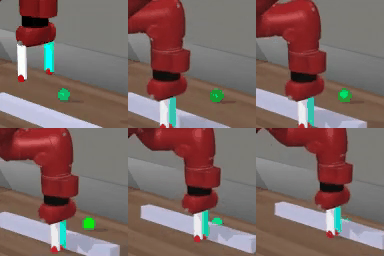
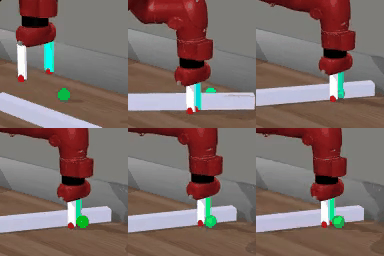
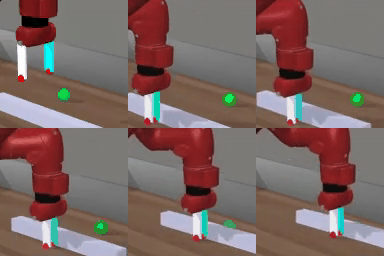
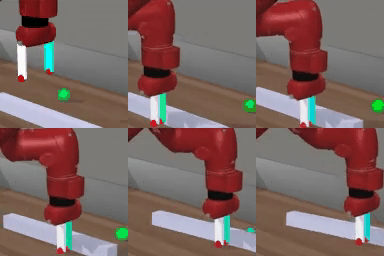
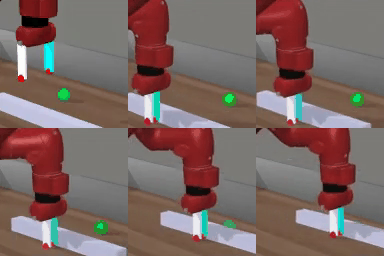
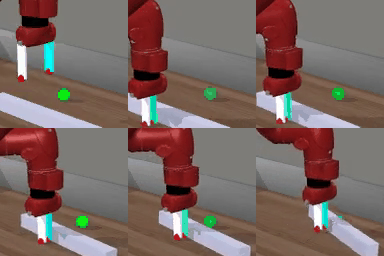
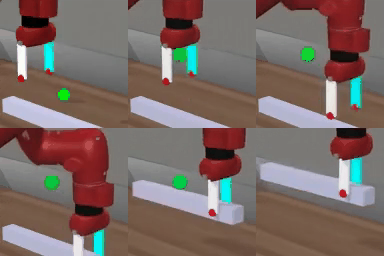
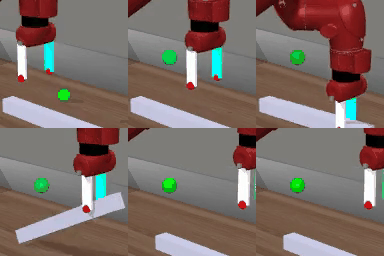
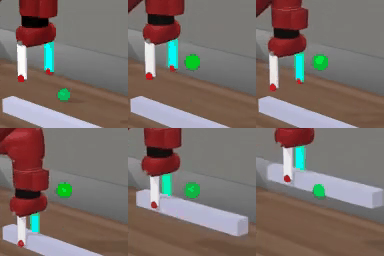
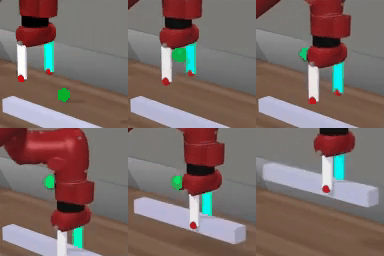
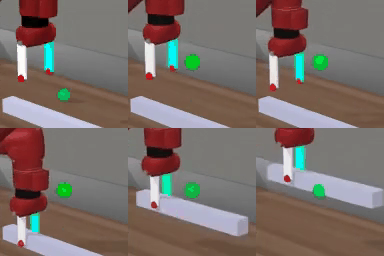
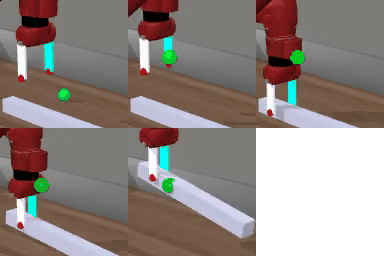
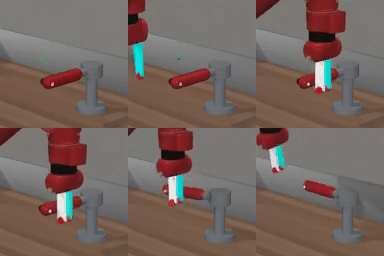
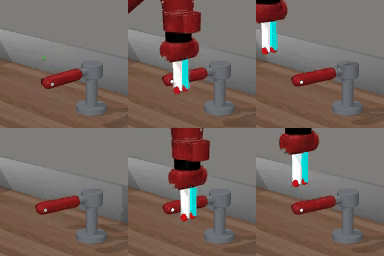
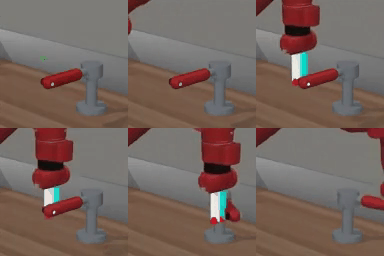
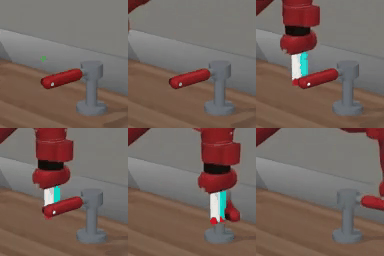
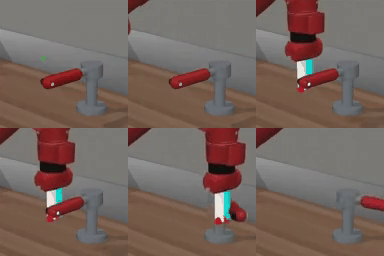
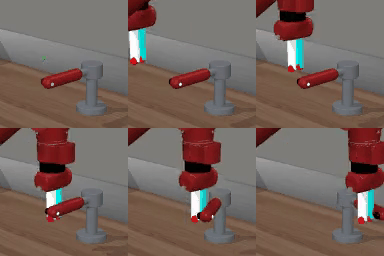
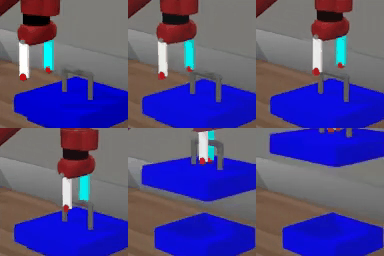
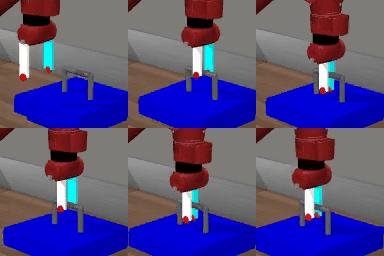
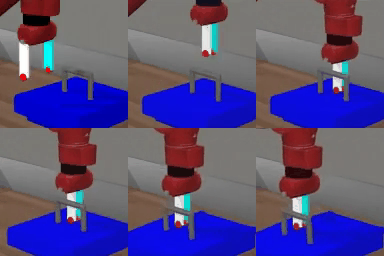
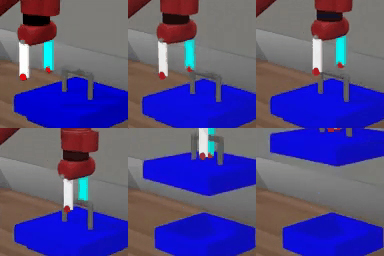
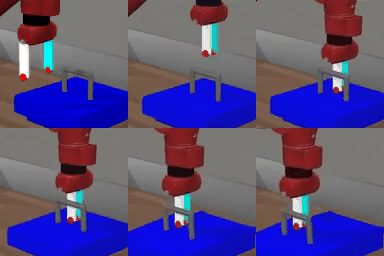
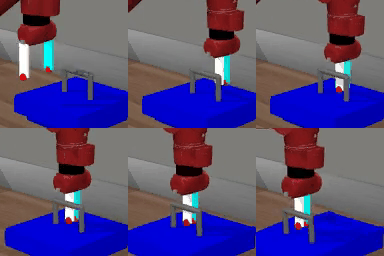
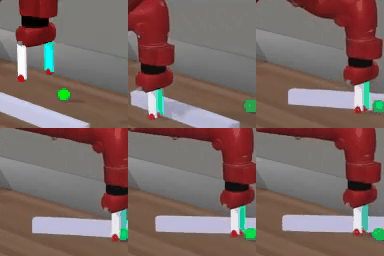
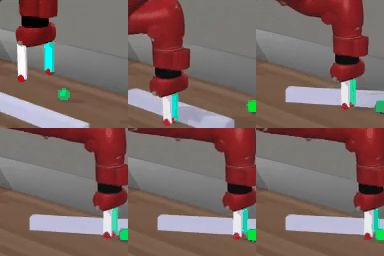
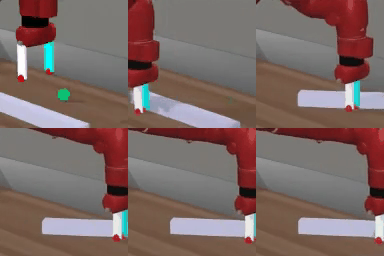
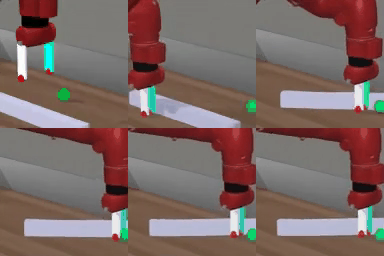
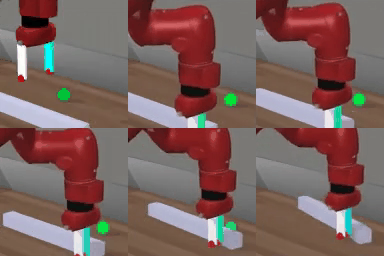
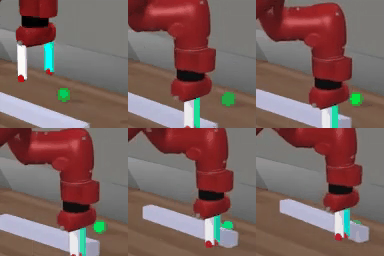
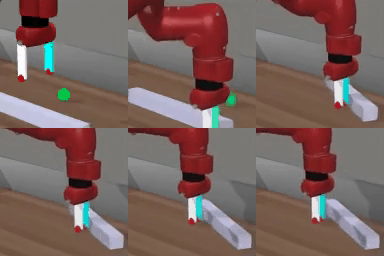
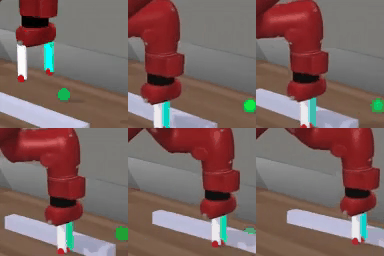
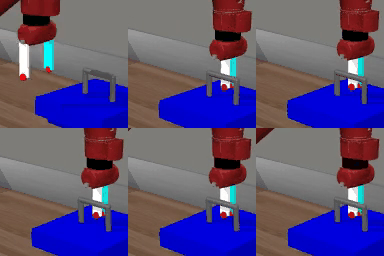
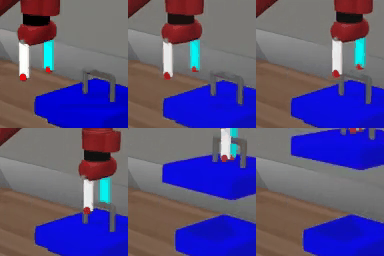
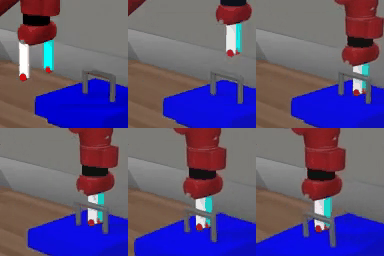
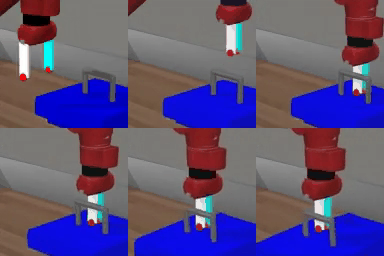
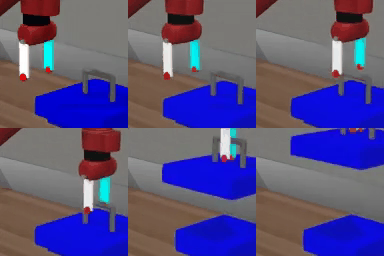
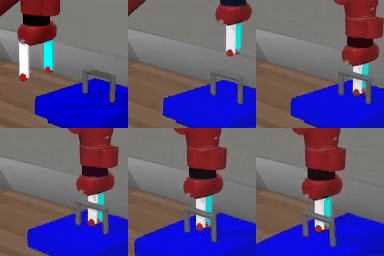
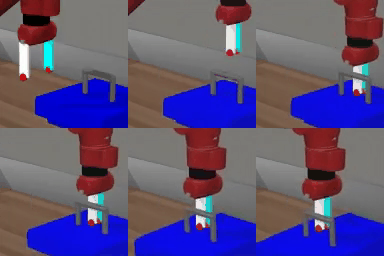
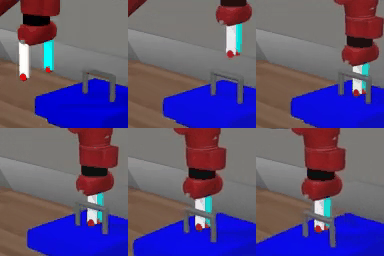
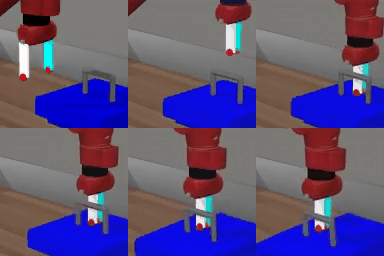
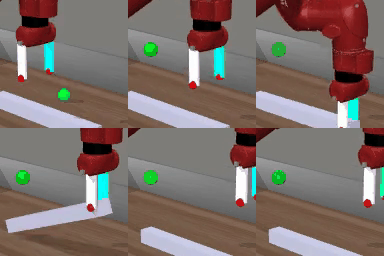
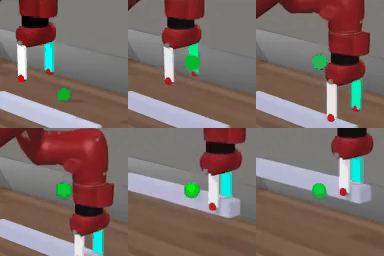
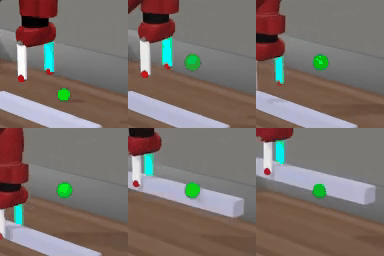
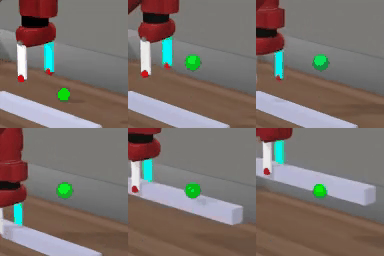
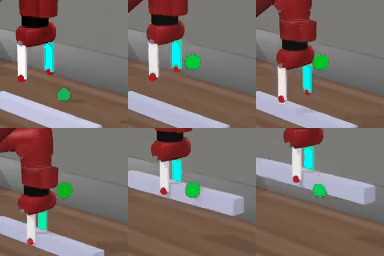
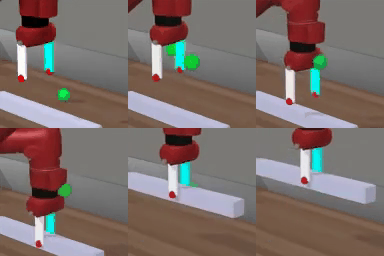
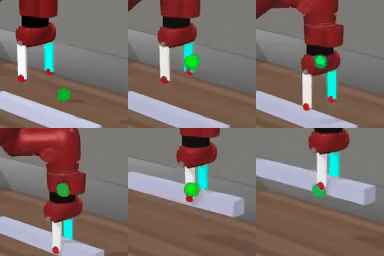
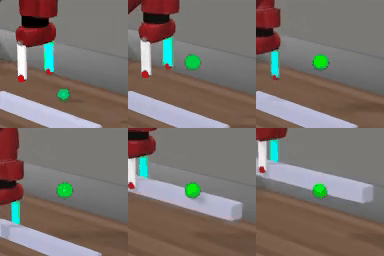
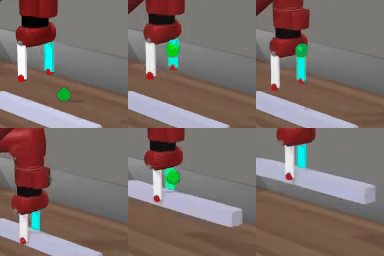
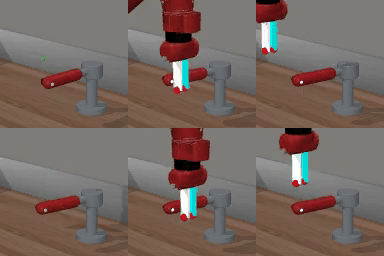
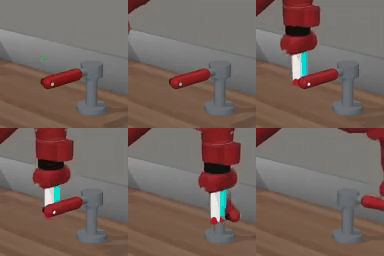
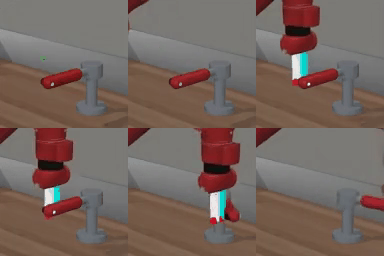
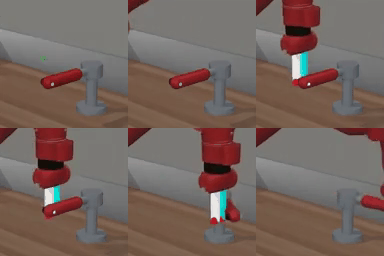
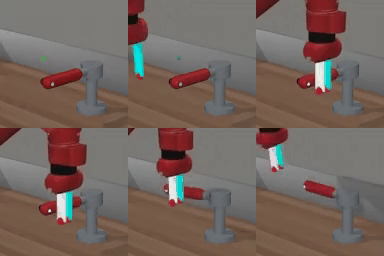
We evaluate our method on a physical robot across three real-world tasks — Slide Block, Pinball, and Balance — where the underlying system parameters are unknown and must be inferred from interaction. After a single failed attempt, RELIC refines its latent embedding and replans, with no task-specific parameter tuning. The grids below compare one-shot rollouts of the baseline (AVDC) against ours (RELIC); success rates over 20 trials per task are summarized in the table that follows. Across all four real-world tasks in the paper (including Open Door, not shown here), this improves one-shot success from 30.0% to 63.8%.

Real-World One-Shot Success

Task AVDC (baseline) Ours (RELIC)
Slide Block 20% 35%
Pinball 25% 65%
Balance 35% 85%
All (4 tasks) 30.0% 63.8%
Simulation Benchmarks
Controlled evaluation and analysis across five manipulation tasks.

Qualitative Results


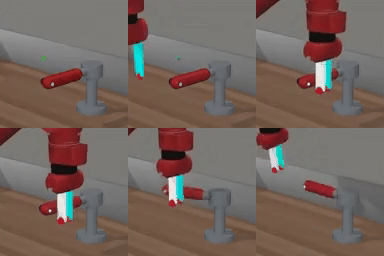
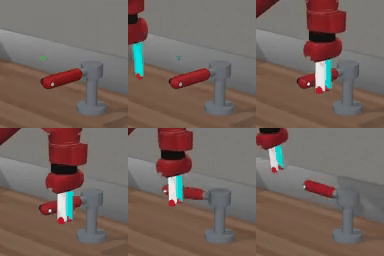
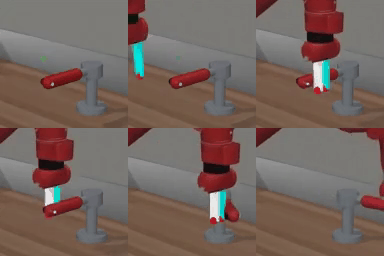
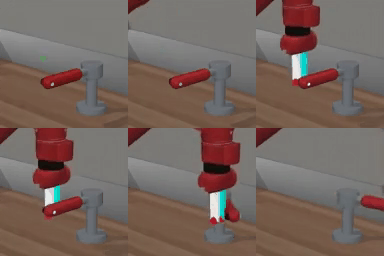
To illustrate how our system adapts to test-time information, we present intermediate outputs of the framework, including the failed plan and interaction, the newly generated plans, the selected plan, and the final execution that improves task completion. Our system operates in three stages:
  • (a) It takes in the failed interaction, updates the state embedding, and generates future plans accordingly.
  • (b) It then selects the plan that deviates the most from the previously failed attempt.
  • (c) Finally, it executes the selected plan to successfully accomplish the task.

  • Task: Push Bar

    Failed Plan
    Failed Interaction
    New Plans
    Selected Plan
    Execution


    Task: Pick Bar

    Failed Plan
    Failed Interaction
    New Plans
    Selected Plan
    Execution


    Task: Turn Faucet

    Failed Plan
    Failed Interaction
    New Plans
    Selected Plan
    Execution


    Task: Open Box

    Failed Plan
    Failed Interaction
    New Plans
    Selected Plan
    Execution


    Video Generation with State Embedding


    Our system generates videos conditioned on the state embedding derived from past interaction video. We show the generated videos for the same task but with and without conditioning on the state embedding. The state embedding helps the system to generate videos that are more consistent with the underlying system parameters.


    Task: Push Bar
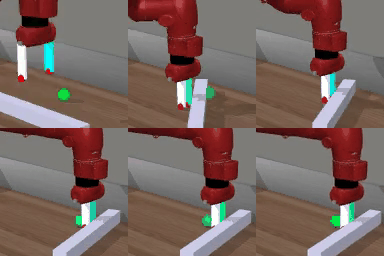
    Conditioned Video


    Plans without State Embedding


    Plans with State Embedding (Ours)


    Task: Open Box

    Conditioned Video


    Plans without State Embedding


    Plans with State Embedding (Ours)


    Task: Pick Bar

    Conditioned Video


    Plans without State Embedding


    Plans with State Embedding (Ours)


    Task: Turn Faucet

    Conditioned Video


    Plans without State Embedding


    Plans with State Embedding (Ours)


    t-SNE Visualization on System Parameters


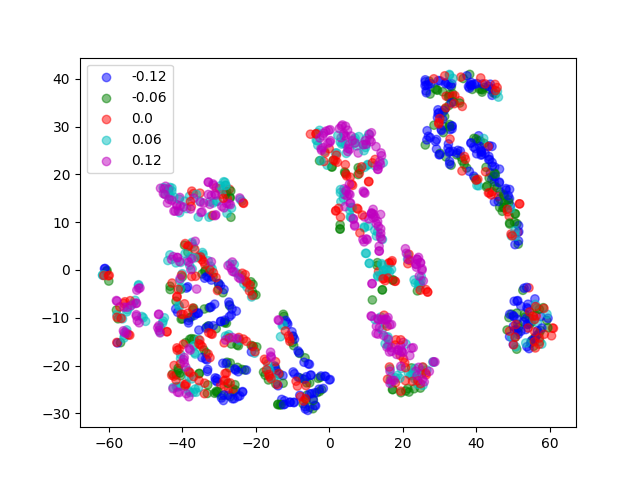
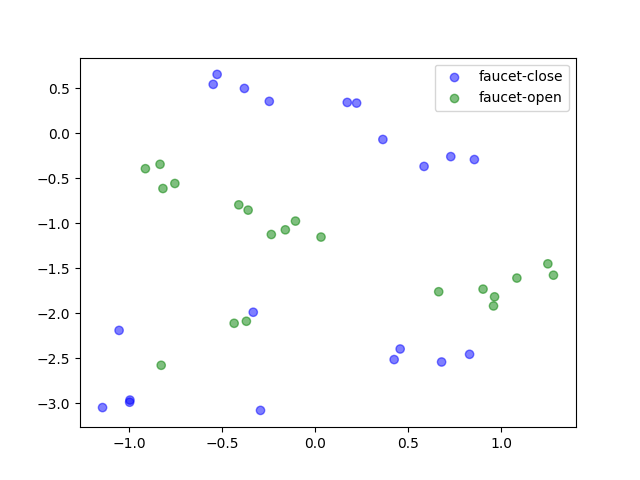
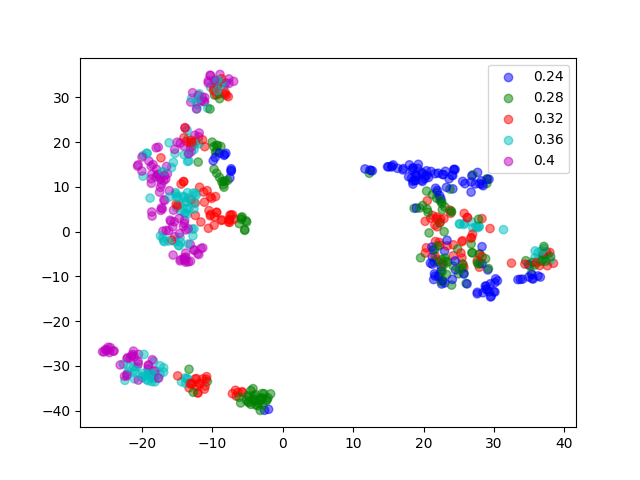
    We visualize the distribution of underlying system parameters using t-SNE applied to state embeddings extracted from interaction videos. The colors indicate the ground-truth system parameters.

    For tasks with discrete modes (e.g., Open Box, Turn Faucet), the clusters are well-separated. In contrast, the distribution is more complex for tasks with continuous modes (e.g., Slide Brick, Pick Bar), which may help explain why learning to identify system parameters for these tasks is more challenging and tends to require more data.
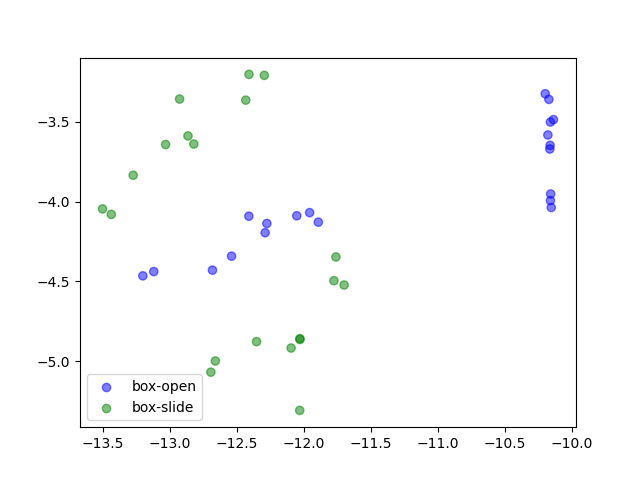
    Open Box
    Turn Faucet
    Slide Brick
    Pick Bar